ACMECS logo and the words Ayeyawady – Chao Phraya – Mekong Economic Cooperation Strategy over an aerial view of a river and town

The ACMECS Master Plan is anchored by three pivotal goals: “Seamless Connectivity, Synchronized Cooperation, and Smart and Sustainable Development.” These objectives form the foundation of collaboration within the Mekong sub-region. The significance of this framework is elegantly encapsulated in the official ACMECS logo, which symbolizes the geographic unity and comprehensive connectivity that underpin the diverse partnerships within the Mekong basin.
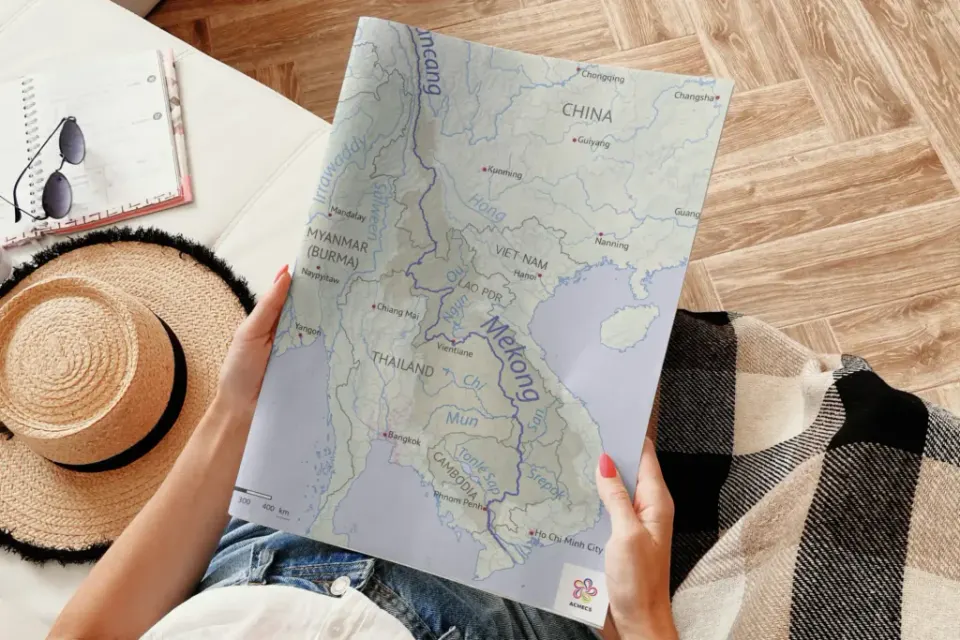
A person holding a printed map of the Mekong sub-region showing the Mekong River and neighbouring countries

A Milestone Event: Unveiling the ACMECS Logo in Bangkok

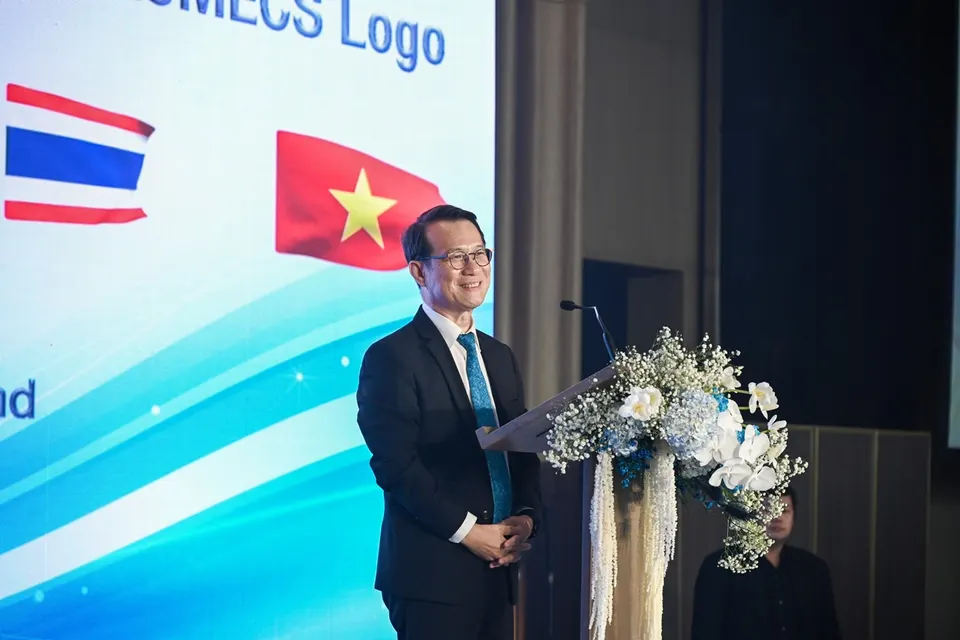
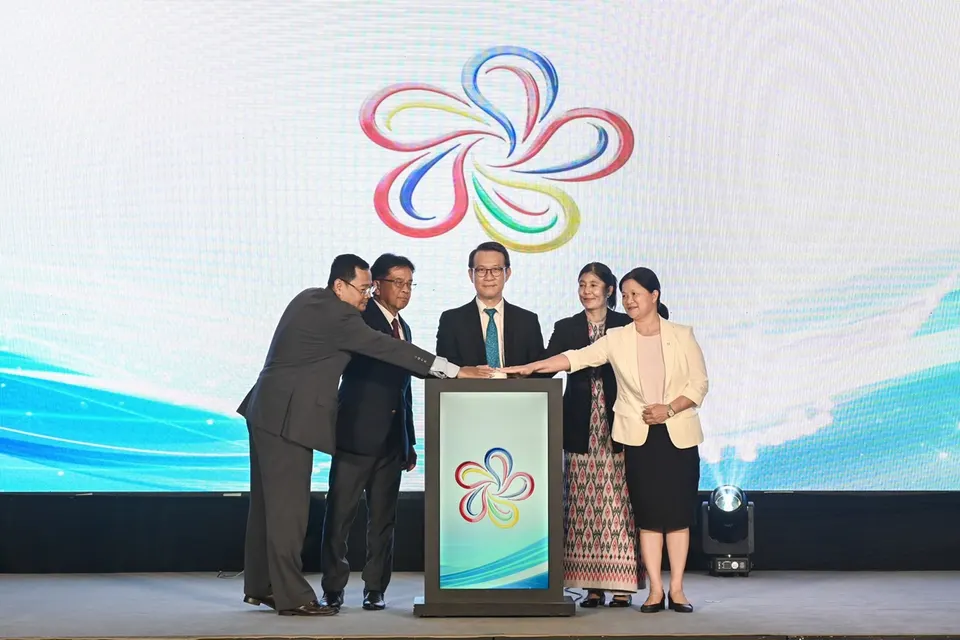
The official unveiling of the ACMECS logo took place on 18 July 2024, in Bangkok. Initiated by Thailand’s Ministry of Foreign Affairs, the ceremony was graced by representatives from ACMECS Member Countries and key figures from affiliated business sectors. This event aimed to strengthen regional partnerships and heighten awareness within both the public and private sectors regarding ACMECS’s crucial goals.
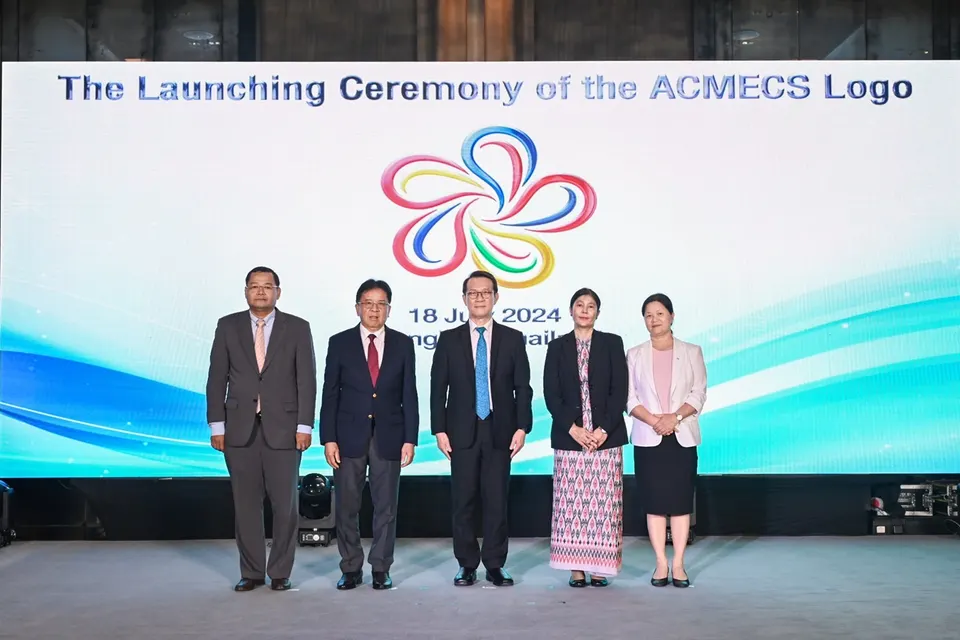
Five officials posing on stage at the launching ceremony of the ACMECS logo in Bangkok, 18 July 2024

Five officials pressing a button together at a podium to unveil the ACMECS logo on a large screen

A speaker smiling at a podium decorated with white flowers during the ACMECS logo launching ceremony

Guests seated in a hotel ballroom during the ACMECS logo launching ceremony

Significance of the ACMECS Logo: A Symbol of Regional Cooperation

The ACMECS logo is more than just a visual identifier; it embodies the essence of regional cooperation and shared aspirations within the Mekong sub-region. The design reflects the commitment to fostering seamless connectivity, synchronized efforts, and sustainable development among member countries. It serves as a constant reminder of the collective goals and the unified vision driving the ACMECS agenda, making it a powerful symbol of the region’s dedication to progress and collaboration. The intertwined symbols and color schemes not only highlight the natural and cultural richness of the region but also underscore the shared commitment to building a more interconnected, resilient, and prosperous future for all. This logo, therefore, stands as a visual narrative of the unity and forward-thinking approach that ACMECS embodies.
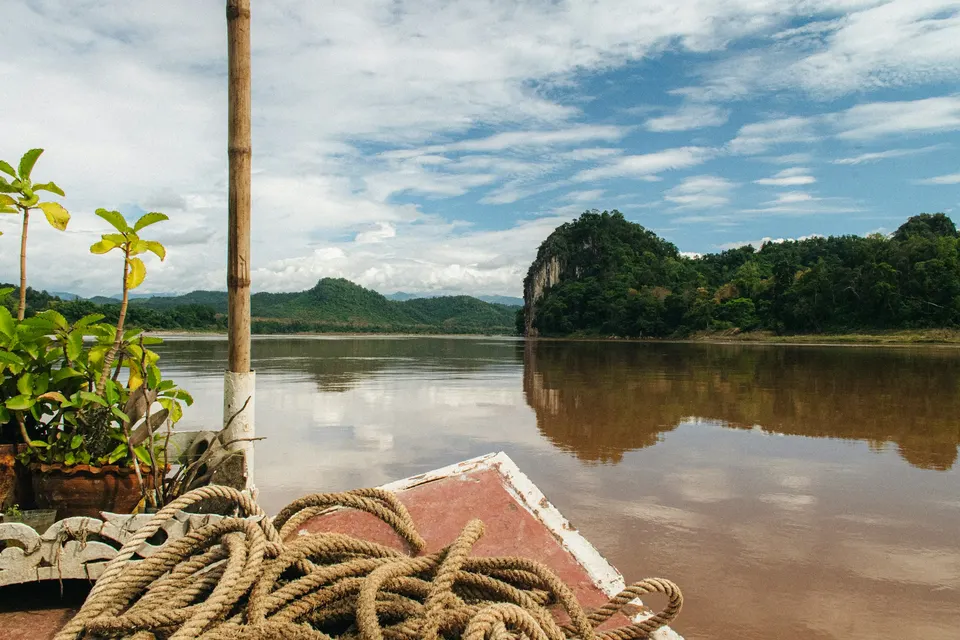
View from a boat’s bow with coiled rope in the foreground and forested limestone hills across the Mekong

ACMECS acts as the “connector” to bridge and align strategic interests of the sub-region’s architecture with Mekong-led development agendas in setting direction for cooperation. ACMECS also promotes constructive engagement with six development partners, namely, Australia, China, India, Japan, the Republic of Korea, and the United States. View on ACMECS’ Official Facebook
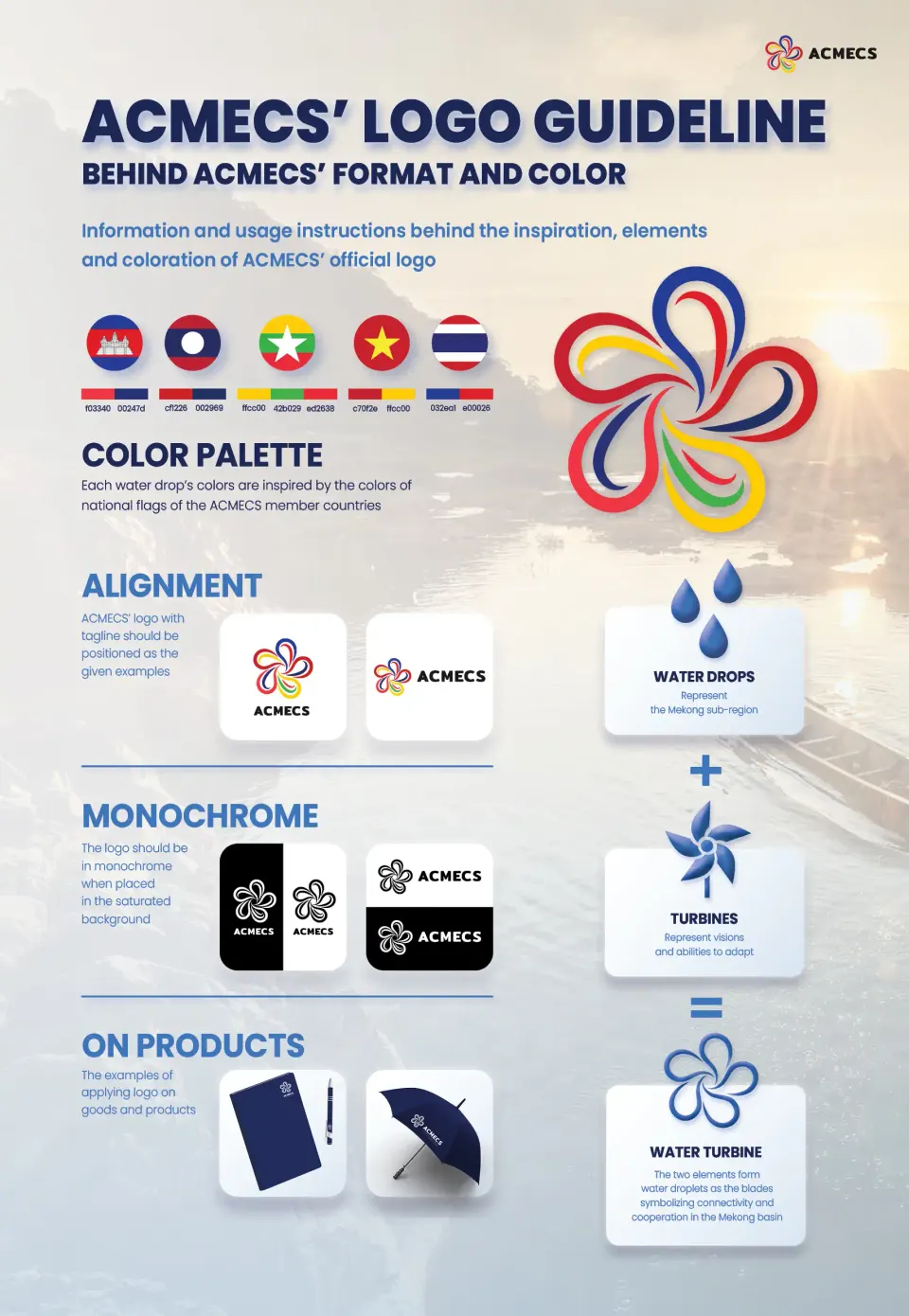
ACMECS logo guidelines infographic featuring the logo’s color palette, alignment instructions, monochrome usage, and product applications. The infographic explains the significance of water droplets and wind turbines, symbolizing seamless connectivity and cooperation within the Mekong sub-region.

Looking Forward: The ACMECS Logo as a Beacon of Regional Development

The ACMECS logo marks a significant milestone in the journey of regional cooperation within the Mekong sub-region. It symbolizes the collective aspirations of member countries to achieve greater connectivity, sustainability, and synchronization in their development efforts. As ACMECS moves forward, the logo will continue to serve as a beacon of the shared values and commitments that drive this unique partnership, reinforcing the importance of collaboration in achieving the region’s ambitious goals.

A cargo barge on a river at sunset under an orange sky

Topics
ACMECSAgricultural CooperationASEANAyeyawady-Chao Phraya-Mekong Economic Cooperation StrategyBagan DeclarationDevelopment PartnersEconomic CooperationHuman Resources DevelopmentIndustrial CooperationMultidimensional ConnectivityRegional IntegrationSoutheast AsiaSustainable DevelopmentTechnological InnovationTourism CooperationTrade and InvestmentTransport Linkages

More articles

See all
Long-tail boats moored along a river beside a hillside village, with the title “ACMECS Roles in Supporting ASEAN Integration”
Article

ACMECS Roles in Supporting ASEAN integration

ACMECS has effectively coordinated with other subregional mechanisms by positioning itself as an open platform highly aligned with ASEAN Centrality. … Such a coordination model not only prevents the fragmentation of the regional architecture but also ensures that member states, while efficiently tapping into international resources, can maintain a balance between autonomy and development cooperation through a unified voice.

Misty mountains rising above the Mekong River, with the title “ACMECS Development Fund: Cooperation-Driven Mechanism for Shared Prosperity”
Article

ACMECS Development Fund: Cooperation-Driven Mechanism for Shared Prosperity

The Fund is also important because it provides a flexible framework for cooperation with development partners. Partners can support ACMECS in several ways, such as funding specific projects, creating country-focused funding arrangements that match their own priorities, or contributing to a common regional pool. This flexibility makes the Fund attractive to external partners and helps align their expertise with the needs of the Mekong subregion.

Cargo boats on the Mekong at sunset, with the title “Example and Success of Ongoing Projects in ACMECS Framework”
Article

Example and Success of Ongoing Projects in ACMECS Framework

At the local and societal level, the benefits of ACMECS projects become more visible in everyday life. Cooperation in sectors such as education, health, energy, and climate adaptation further strengthens social well-being and community resilience. In particular, the growing emphasis on ‘soft connectivity’—including knowledge exchange, human resource development, and people-to-people links—ensures that regional cooperation translates into inclusive and people-centered development.